
Holter monitoring at home
A small recorder tracks your heart rhythm for 24 hours.
- Home visit available
- 24 hours of recording
₹5,000 ₹3,000
About this test
A Holter monitor is a portable ECG recorder worn for 24 hours while you go about your day. It can catch irregular rhythms that a short ECG misses.
Our technician fits the device at home, explains the diary you must keep, and collects it the next day.
Who it is for
- Palpitations, skipped beats or fainting spells
- Checking whether heart medicines are working
- Evaluation advised by a cardiologist
How to prepare
- Bathe before the device is fitted; you cannot get it wet afterwards
- Wear a loose, front-opening shirt
- Note symptoms and activities in the diary during the 24 hours
What a Holter monitor records
A Holter monitor is a small, battery-powered ECG recorder that you wear for 24 hours while you carry on with normal life. A standard ECG records only for a few seconds, so it can miss rhythm problems that come and go. The Holter test captures every heartbeat across a full day and night.
The report shows the average, lowest and highest heart rate, any pauses, extra or skipped beats, episodes of fast or irregular rhythm, and whether your symptoms matched any rhythm change.
How the test is done
- Our technician cleans the skin on your chest and attaches several electrodes connected by thin wires to the recorder.
- The recorder is worn on a belt or in a small pouch. You go about your usual day, including sleep.
- You note the time and type of any symptom, such as palpitations or dizziness, in a diary. This helps match symptoms with the recording.
- After 24 hours the technician collects the device, and the recording is analysed to prepare your report.
Who may need a Holter test
- Palpitations, skipped beats, racing heart or unexplained dizziness
- Fainting or near-fainting episodes
- Checking whether heart rhythm medicines are working
- Follow-up after a pacemaker or heart procedure, or when a cardiologist advises it
Dos and don’ts while wearing the monitor
- Do not get the monitor or electrodes wet. Bathe before it is fitted and avoid showers until it is removed.
- Wear loose cotton clothes that open at the front.
- Keep mobile phones away from the electrodes’ area as far as possible, and avoid electric blankets and strong magnets.
- If an electrode comes loose, press it back gently and note the time in the diary. Call us if the device stops working.
- Keep to your normal activities. Doing nothing unusual gives a more useful record, but do note exercise or stress.
Severe chest pain, sweating or fainting is an emergency. Call 112 or go to the nearest hospital.
More details
Holter Test in Delhi
Holter Test
Price : INR 4000/-
What is a holter monitor?
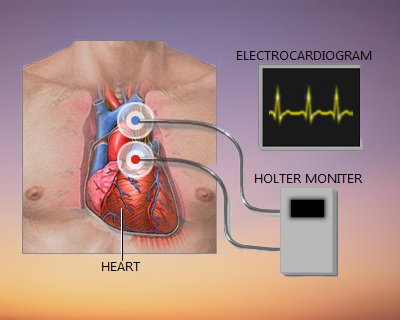
A holter monitor is a device that records your heart beats. It contains electrodes, wires and a small machine that attaches to your waistband.
Why do I need a holter monitor?
You may need a holter monitor if your doctor thinks there could be a problem with your heart rate or rhythm. You might have symptoms such as:
- Fainting
- Dizziness
- Shortness of breath
- Chest pain
- Irregular heartbeat (arrhythmia)
Even if you’ve had an ECG, you may still need to wear a holter monitor. ECGs only monitor your heartbeat for a short time – which isn’t always long enough to identify potential problem.
What are the risks of having a holter monitor?
Holter monitoring is a safe and painless test with no significant risks. Some people experience minor skin irritation from the sticky dots (electrodes) used to monitor the heartbeat.
How do I prepare for a holter monitor?
There’s not a lot you need to do to prepare – but you will need to shower. After your holter monitor has been fitted, you can’t get it wet or remove it. The hair on your chest may need to be shaved to help the electrodes stick to your skin.
What happens after a holter monitor?
After one or two days, you’ll return to your doctor’s office with your diary. Your doctor will remove the holter monitor, discuss your results and recommend an appropriate treatment plan to help you manage your symptoms moving forward.
What happens during a holter monitor?
The holter monitor test is a very straightforward procedure:
- Electrodes are stuck to your chest
- The electrodes are connected to the small holter machine device
- You’ll be shown how to attach the device to your clothes
While the device is fitted, you’ll need to:
- Wear it during your usual activities
- Keep it on at all times, even during sleep
- Never take it off
- Keep a diary of all your daily activities and the time you did them
- Record any specific symptoms you feel (dizziness, light-headedness, chest pain, shortness of breath)
HumanCare Path Labs: Your Trusted Partner in Healthcare and Diagnostics
Experience Precision and Care
At HumanCare Path Labs, we are committed to providing accurate and timely diagnostic services to our patients in Delhi and NCR. With state-of-the-art technology and a team of highly skilled professionals, we offer a comprehensive range of diagnostic tests to cater to your diverse healthcare needs.
Why Choose HumanCare Path Labs?
- State-of-the-Art Technology: We utilize the latest diagnostic equipment to ensure accurate and reliable results.
- Expert Team: Our experienced pathologists and technicians are dedicated to delivering the highest quality care.
- Convenient Locations: Our multiple clinics across Delhi and NCR make it easy to access our services.
- Quick Turnaround Time: We prioritize timely results to help you make informed decisions about your health.
- Patient-Centric Approach: We are committed to providing a comfortable and hassle-free experience for all our patients.
Our Range of Services
HumanCare Path Labs offers a wide range of diagnostic services, including:
- Blood Tests: Comprehensive blood tests to assess overall health, including blood sugar tests, cholesterol tests, liver function tests, kidney function tests, and more.
- ECG: Electrocardiogram (ECG) tests to diagnose heart conditions and abnormalities.
- MRI Scans: Magnetic Resonance Imaging (MRI) scans for detailed imaging of internal organs and tissues.
- PET Scans: Positron Emission Tomography (PET) scans for detecting cancer and other diseases.
- Holter Monitoring: Continuous monitoring of heart rhythm over 24 hours.
- NCV Tests: Nerve Conduction Velocity tests to assess nerve health.
- 24-Hour Blood Pressure Monitoring: Continuous monitoring of blood pressure over 24 hours.
- EMG Tests: Electromyography tests to assess muscle health and nerve function.
- Sleep Studies: Polysomnography to diagnose sleep disorders like sleep apnea.
- EEG Tests: Electroencephalography to measure brain electrical activity.
- Pulmonary Function Tests: To assess lung function and diagnose respiratory conditions.
Why Regular Diagnostic Tests are Important
Regular diagnostic tests are crucial for maintaining good health. They can help detect potential health problems early, allowing for timely intervention and treatment. Some of the benefits of regular diagnostic tests include:
- Early Detection of Diseases: Regular check-ups can help detect diseases like cancer, diabetes, and heart disease in their early stages.
- Monitoring Chronic Conditions: For people with chronic conditions, regular tests can help monitor disease progression and adjust treatment plans as needed.
- Assessing Overall Health: Comprehensive blood tests can provide insights into overall health, including nutritional deficiencies, hormonal imbalances, and other underlying conditions.
- Peace of Mind: Knowing your health status can provide peace of mind and help you make informed decisions about your lifestyle and healthcare.
Book Your Appointment Today
To get your tests done, please fill out the form on contact page, call our front desk on below given numbers, or simple visit the center directly. Our friendly staff is ready to assist you with any questions or concerns you may have.
Visit Us
J-17, Lower Ground Floor, Kalindi Kunj Rd, Jamia Nagar, Okhla, New Delhi 110025
+91 62040 63485
+91 80762 50713
+911145665176
info@hcpathlabs.com
Opening Hours
Mon – Sat: 8:00 am – 6:00 pm Sundays: 8:00 am – 1:00 pm
Holter Monitor Test in Delhi, 24-Hour Heart Monitoring Delhi, Ambulatory ECG in Delhi, Cardiac Event Monitoring Delhi, Portable ECG Monitoring Delhi, Holter Monitoring Services Delhi, Holter Test Cost in Delhi, Holter Monitor Rental Delhi, Continuous ECG Monitoring Delhi, Heart Rhythm Monitoring Delhi, Holter Monitoring Centers in Delhi, Holter Test Home Service Delhi, Holter Monitoring Specialists Delhi, Holter Monitor Test Near Me, Holter Monitoring Appointment Delhi
Frequently asked questions
Do you really come to my home for this test?
Yes. Our trained technician visits with portable equipment. Share your address on WhatsApp and we confirm the visit slot with you.
Do I need a doctor's prescription?
A prescription helps us run the right test, but you can also book on your own for a routine check. Send a photo of the prescription on WhatsApp if you have one.
Can I sleep with the Holter monitor on?
Yes. Place the recorder beside you or under the pillow, taking care not to pull the wires. It is designed to record through the night.
Is a Holter monitor painful?
No. The only discomfort may be mild skin irritation from the sticky pads. Tell us if you have a known skin allergy to adhesives.
What if I have no symptoms during the 24 hours?
It is still useful. The report shows your normal pattern and any silent rhythm changes. Your cardiologist may advise repeating the test or a longer recording if symptoms are infrequent.
How is a Holter different from an ECG?
An ECG is a snapshot of a few seconds. A Holter is a continuous 24-hour recording, so it can catch rhythm problems that do not show up in a short test.
Can the test be done at home and what does it cost?
Yes, our technician can do this test at your home in Delhi and Noida. The current rate is shown on this page. Any visit charge is confirmed on WhatsApp or phone before the technician is sent, so there are no surprises.
Medical information here is for general awareness. Your doctor decides which tests you need.